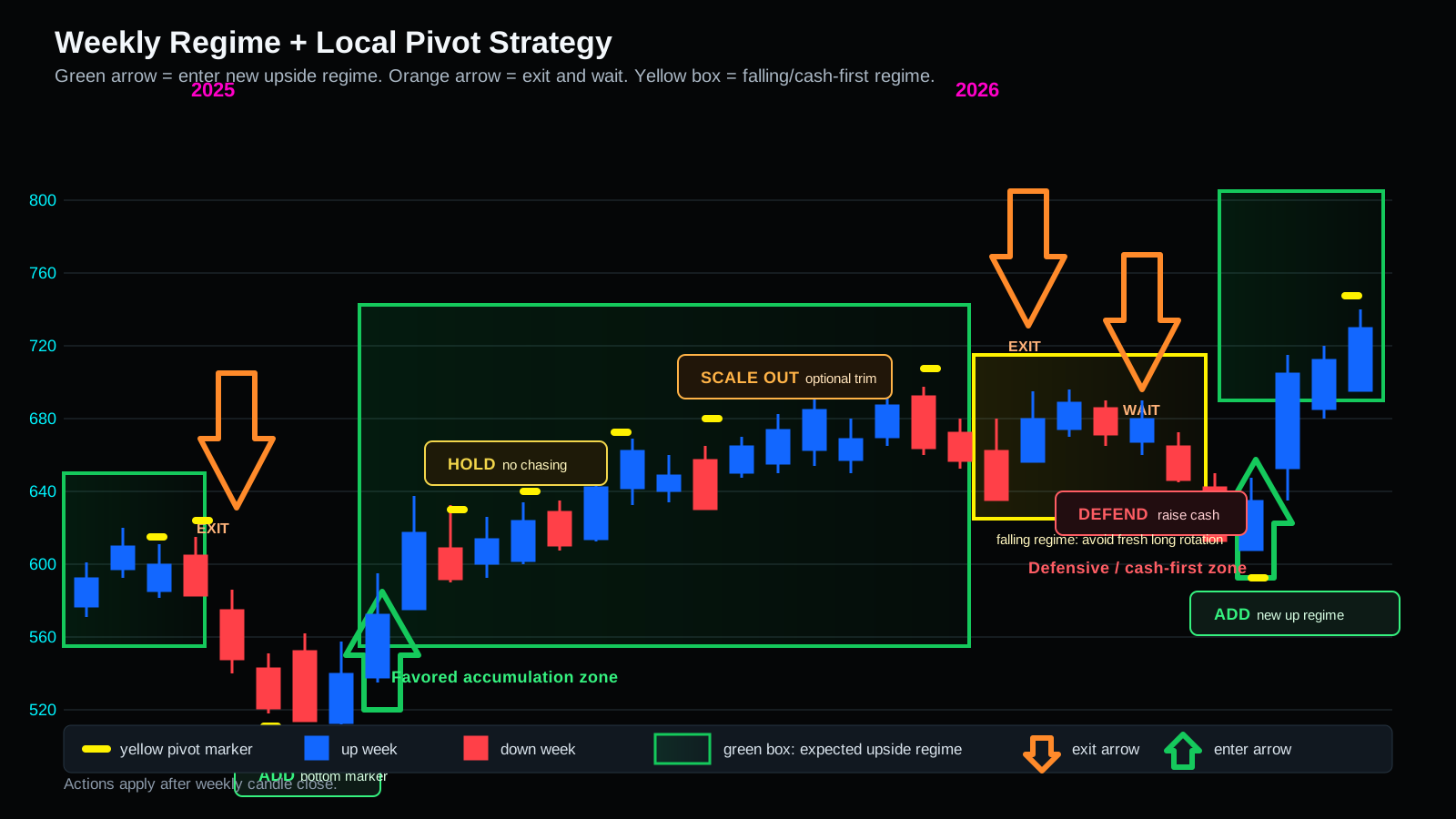
Use weekly signals to identify sectors, markets, or stocks with noticeable upward movement.
Strategy detail
Rotation Strategy
Rotation starts with strength. The goal is to follow countries, exchanges, sectors, or stocks that have already demonstrated noticeable upward movement, then exit at a regime-change arrow and wait for the next qualified arrow before getting back in.
Important:
This page explains an informational research strategy. WealthVelocity does not provide personalized investment advice, place trades, route orders, manage accounts, or guarantee returns.
Core idea
Trail strength. Exit weakness.
The rotation strategy begins with evidence that something is already moving well. That may be a country, an exchange, a U.S. sector ETF, a global sector theme, or an individual stock posted in the weekly signal list for a specific exchange.
The strategy does not rely on affection for a name, news excitement, or hope that a favorite company will recover. Even a great company or attractive country can go through periods where the price structure tells a weaker story. Rotation follows the move while the regime remains constructive, then exits completely or moves to cash when the setup starts to show meaningful weakness.
For simple sector rotation, the arrow is the decision point. After an exit arrow, the investor does not keep trying to re-enter every bounce. That bucket waits in cash until a new upside-regime arrow appears.
Stay with the opportunity while pivots, structure, and signal behavior remain supportive.
When the regime arrow turns down, get out of that rotation trade and stop forcing fresh entries.
Do not get back in until the next qualified upside arrow or stronger leadership signal appears.
Two rotation lanes
Same logic. Different lanes.
At the highest level, rotation can compare countries and exchanges to see where money and value appear to be moving. Inside one exchange, it can be applied to sector ETFs such as XLF, XLY, XLK, XLE, and related sector codes. The question is which market or sector is showing leadership, where that move is becoming exhausted, and where capital should rotate next.
A falling-regime box is different from a normal pullback inside an upside regime. Advanced traders may study short exposure there, but for most members the cleaner interpretation is defense: raise cash, avoid fresh long rotation, and wait for the next up arrow.
Rotate toward stronger markets when global flow changes, or hold cash when the covered market turns weak.
Use exchange-level sector and stock signals to follow stronger individual opportunities.
Rotation capital may sit in cash for a few weeks while waiting for the next up-regime arrow.
Signal meaning
Weakness means move.
A rotation investor reads signals differently from a permanent holder. The point is not to endure a long decline. The point is to move capital away from weakening leadership and toward the next stronger opportunity, or to cash when the covered country, exchange, or sector is no longer in a favorable regime.
| Marker | Rotation Meaning | Possible Action |
|---|---|---|
| Strength Signal | The sector or stock is already showing meaningful upward evidence. | Consider entry for the rotation bucket. |
| Up Regime Arrow | The model is marking a new constructive regime after weakness or cash. | Re-enter or rotate toward the new stronger opportunity. |
| Fast Early Gain | The move may be strong enough to harvest partial profit. | Consider the take-profit rule, such as selling half after a strong first-week move. |
| Exhaustion | The upward move may be stretched or losing energy. | Scale out, prepare to rotate, or stop adding. |
| Down Regime Arrow | The green-box style regime has failed, or the structure has weakened enough that the rotation case may be failing. | Exit completely and wait in cash until another qualified arrow appears. |
| Falling Regime Box | The market may offer short-side context for advanced traders, but ordinary long rotation is no longer favored. | Use a cash-first stance; do not treat a small bounce as a fresh long regime. |
Regime-arrow example
Out on down. Back on up.
The green box shows the favored upside regime. Orange arrows mark places where the rotation bucket would get out and stop trying to force the trade. Green arrows mark places where the bucket can consider getting back in.
This is why regime change is so useful for sector rotation. The investor does not need to debate every small candle. The model defines the regime, and the bucket follows the next qualified arrow.